August 12, 2026
Look back at the last two weeks.
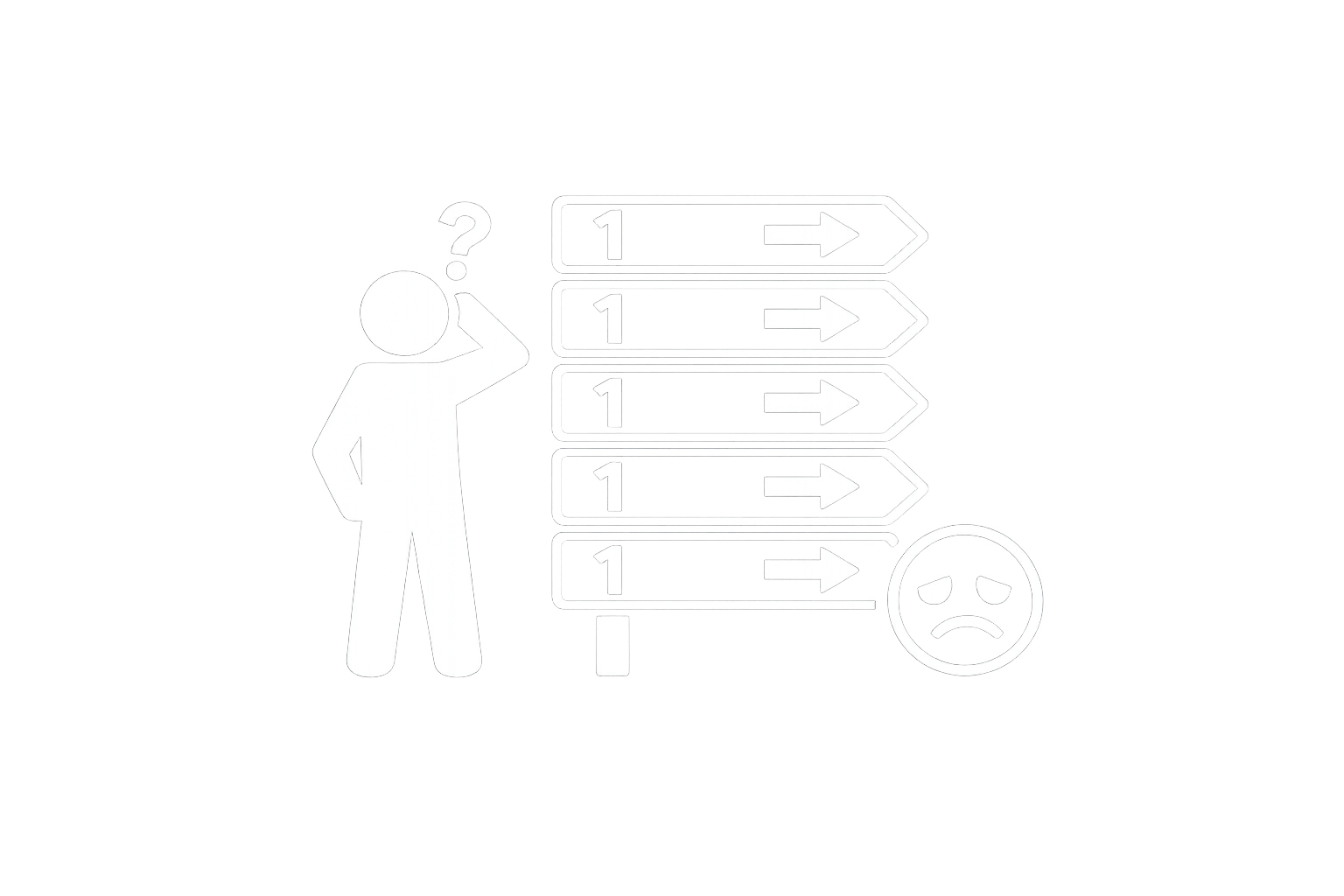
The new client onboarding was priority one. The security incident at another account was priority one. The tooling migration you have been meaning to finish was priority one. The hiring push for the open tech seat was priority one. Somewhere in there, a new service idea came up and you told the team that one was priority one too.
Five things. All labeled the most important thing your team could be doing.
Here is what actually happened inside your team while you were calling all five of those things urgent. They stopped believing the word. They aren't being cynical. Five things can't all be the most important thing, and everyone doing the actual work knows that even if nobody says it out loud in the team meeting.
When everything is priority one, nothing is. Your team learns to treat the label as noise instead of signal. They stop asking what matters most this week and start doing whatever landed in their inbox most recently or whoever asked the loudest.
This isn't a motivation problem on your team. Your people aren't lazy or scattered. They are responding rationally to an environment where priorities never actually got prioritized.
THE TWO WAYS OWNERS RESPOND TO PRESSURE
Every MSP owner runs a business full of constant, real demands. New opportunities. Fires that need attention right now. Ideas that feel too good to sit on for even a week. The question isn't whether you feel pressure to move fast. Every owner does. The question is what you actually do with that pressure.
Some owners respond to every new opportunity by moving on it immediately. A prospect mentions interest in a new service line and the whole team gets rerouted toward building it that week. A competitor launches something interesting and the owner wants a response out the door within days. This instinct feels like leadership from the inside. It looks like energy and decisiveness from the outside.
Over time, the team learns something different is actually happening. Direction changes constantly. Today's emergency will probably get replaced by tomorrow's before it is even finished. Investing real focus into any one initiative starts to feel risky, because the team has watched initiative after initiative get abandoned halfway through the moment something newer and shinier showed up.
Other owners respond to the exact same pressure completely differently. Before saying yes to something new, they ask what would have to come off the plate to make room for it. They understand that adding one more priority is never free, even when the new thing is genuinely valuable, because every yes quietly pulls attention away from whatever the team was already supposed to be focused on. These owners protect a short, clear list of what actually matters right now, and they say no, or not yet, to almost everything else, even to good ideas.
The difference between these two approaches shows up directly in how much real, focused progress a team makes in a given quarter. Teams working under the first pattern stay constantly busy and often finish very little. Teams working under the second pattern sometimes look less frantic on the surface and consistently ship the work that actually moves the business forward.
WHY THIS HITS MSPS HARDER THAN MOST BUSINESSES
MSPs are unusually vulnerable to this pattern, because the daily reality of the work trains everyone, owner included, to treat urgency as the only signal that matters.
A server goes down and it is genuinely, immediately urgent. A security incident is genuinely, immediately urgent. That constant stream of real fires makes it easy for the pace and tone of an actual emergency to bleed into everything else. A new service launch gets talked about with the same intensity as an outage. A process improvement gets framed with the same urgency as a client whose network is down right now.
The result is a team that struggles to tell the difference between a real fire and an owner's excitement about a new idea, because both arrive wearing the same tone of voice. Real client emergencies deserve that intensity. A new internal initiative almost never does, and treating it the same way trains your team to stop calibrating urgency correctly across the board. Eventually a real emergency lands and gets the same half-attention as everything else, because the team has learned that "urgent" from the owner doesn't reliably mean what it used to mean.
WHAT TO ACTUALLY DO ABOUT IT
Three practices fix this. None of them require a new tool or a new hire. They require you to change how you communicate priority.
Name the tradeoff out loud. Not privately in your own head while you decide something new matters more. Out loud, to the team. "We are prioritizing this now, which means the tooling migration is on hold until it is done." This single habit forces the tradeoff into the open instead of letting it happen silently, and it tells the team explicitly what they can stop worrying about for now, instead of leaving them to guess whether the old priority quietly died or is still supposed to be moving forward in the background.
Limit how many things can be labeled the top priority at once. Not five. Not three. One, maybe two, for any given team or individual at any given time. If a third thing genuinely needs to jump the line, something else has to come off first, and that decision belongs to you, made visibly, not absorbed silently by a team that is already stretched thin trying to hold all five in their head at once.
Separate real urgency from your own enthusiasm before you communicate anything as a priority. Ask yourself honestly whether something is actually time-sensitive the way a client outage is time-sensitive, or whether it just feels exciting to you right now. If it is the second one, it can almost always wait a week. Saying that out loud, even to yourself, protects the credibility of the word "urgent" for the moments that actually need it.
WHY THIS IS A SYSTEM PROBLEM, NOT A PEOPLE PROBLEM
Priority clarity isn't a personality trait some owners naturally have and others don't. It's a system. Like every other system in your business, it belongs in your field guide rather than living only in your own head, changing shape every time you feel a new sense of urgency.
Document how priorities get set and communicated to the team. Document the rule for how many things can carry the top priority label at once for any given team or individual. Document the tradeoff conversation that has to happen out loud before something new gets added to anyone's plate. When this is written down and actually followed, your team stops needing to guess what matters most this week. The system tells them, instead of the loudest voice in the room or the most recent message in the group chat deciding it by default.
This also protects you from yourself on your busiest, most reactive days. A documented rule that only one or two things can carry the top priority label at once doesn't care how exciting the new opportunity feels in the moment. It forces the tradeoff conversation whether you feel like having it or not, which is exactly when you need that discipline the most.
Your team isn't unfocused. They are responding rationally to a system where priorities were never actually prioritized, where everything urgent competed with everything else urgent, and where the word "priority" stopped meaning anything because it got attached to five different things in the same week.
That's not a people problem. It's a system you built without meaning to, one urgent request at a time, and it is a system you can rebuild the same way.
Name the tradeoff out loud the next time you add something new. Limit the top priority label to one or two things at a time. Ask yourself honestly whether something is really urgent or just exciting before you hand that word to your team.
Fix the system. Watch your team stop scattering across five priorities and start finishing the one or two that actually matter. Start at builttorunmsp.com.
FREQUENTLY ASKED QUESTIONS
Why does having too many top priorities hurt team focus more than having too much work?
When multiple initiatives all get labeled the highest priority, a team loses the ability to distinguish what actually matters most from everything else competing for attention. This is different from simply having a heavy workload, since a team with a clear single priority and a lot of work can still focus effectively. The real damage happens when everything gets framed with the same urgency, which trains the team to treat the word "priority" as meaningless and instead default to reacting to whatever request arrived most recently or came from the loudest voice.
How many things should a team be told are top priority at once?
One or two at most for any given team or individual at any given time. If a genuinely urgent third item needs to jump ahead, something already on the list needs to be explicitly deprioritized first, and that decision should be made visibly by leadership rather than left for an already stretched team to sort out on their own. Limiting the top priority label protects its meaning, so that when something truly is urgent, the team recognizes it and responds accordingly instead of treating it like just another item in a long list of things called urgent.
Why do MSP owners struggle more than most leaders with constantly shifting priorities?
The daily reality of managed services work involves real, immediate emergencies like outages and security incidents that genuinely deserve urgent, all-hands attention. This constant exposure to real fires makes it easy for an owner to unconsciously apply that same tone and urgency to things that aren't actually time-sensitive, like a new service launch or an internal process improvement. Over time, the team loses the ability to distinguish a genuine emergency from an owner's excitement about a new idea, because both get communicated with identical urgency, which erodes the team's ability to calibrate response speed correctly across the board.
What should a leader say before adding a new priority to their team's workload?
The tradeoff should be stated explicitly and out loud rather than assumed or left unsaid. A simple, direct statement works best: naming the new priority and naming specifically what is being deprioritized or paused to make room for it. This prevents the team from being left to guess whether an old priority quietly died or is still supposed to be moving forward in the background while a new one gets added on top of it. Making the tradeoff visible also forces the leader to genuinely weigh whether the new priority is worth the cost, rather than treating new priorities as free additions with no real tradeoff attached.
How should priority setting be documented in a business operating system or field guide?
Priority setting should be treated as a defined system rather than left to individual judgment in the moment. This includes documenting how priorities get communicated to the team, a firm rule on how many items can carry the top priority label at once, and a required tradeoff conversation that happens before anything new gets added to a team's workload. Documenting this system removes dependence on any single leader's instincts in a high-pressure moment and gives the entire team a consistent, predictable way to understand what actually matters most at any given time, which is what ultimately produces sustained focus on high-impact work.

Adam Kuester
Adam Kuester has a PhD in genetics and a career built inside managed services, an unusual combination that shapes how he works. He spent time designing operations at an MSP before joining Bruce McCully to build Galactic Advisors, where he's served as VP of Special Projects. His focus has been operational: finding gaps, building systems, and turning expertise into tools MSP owners can use across a partner base of nearly 1,000 companies. Built to Run MSP is that same work in a different form, practical frameworks for MSP owners who are good at winning business and want to get equally good at running it.