May 27, 2026
Here's a question. What does done look like in your dispatch system right now?
Not what the process says. Not what the SOP describes. What does done actually look like when a ticket moves through your system correctly from start to finish?
If you had to answer that in one sentence right now, could you?
Most owners can't. And that's not a criticism. It's a diagnosis. Because if you can't define what done looks like, your team can't either. And if your team can't define done, they're making it up on every ticket. Some of them are getting it right. Some of them aren't. And you have no way to tell the difference until a client calls.
That's not a dispatch problem. That's a system problem. And it has a specific cause.
Your system is missing three things.
WHAT MAKES A SYSTEM ACTUALLY WORK
Most owners build their field guide the same way. They document the steps. They write out the process. They put it somewhere the team can find it. And then they wonder why things still go sideways.
The steps are right. The process is documented. And the outcome is still inconsistent.
Here's why. A process document tells your team what to do. It doesn't tell them what they're trying to produce. It doesn't tell them how to know if they produced it. And it doesn't tell them or you when things start drifting before a client feels it.
That's the gap. And it lives in every system that was built as a process document instead of a system with all three components.
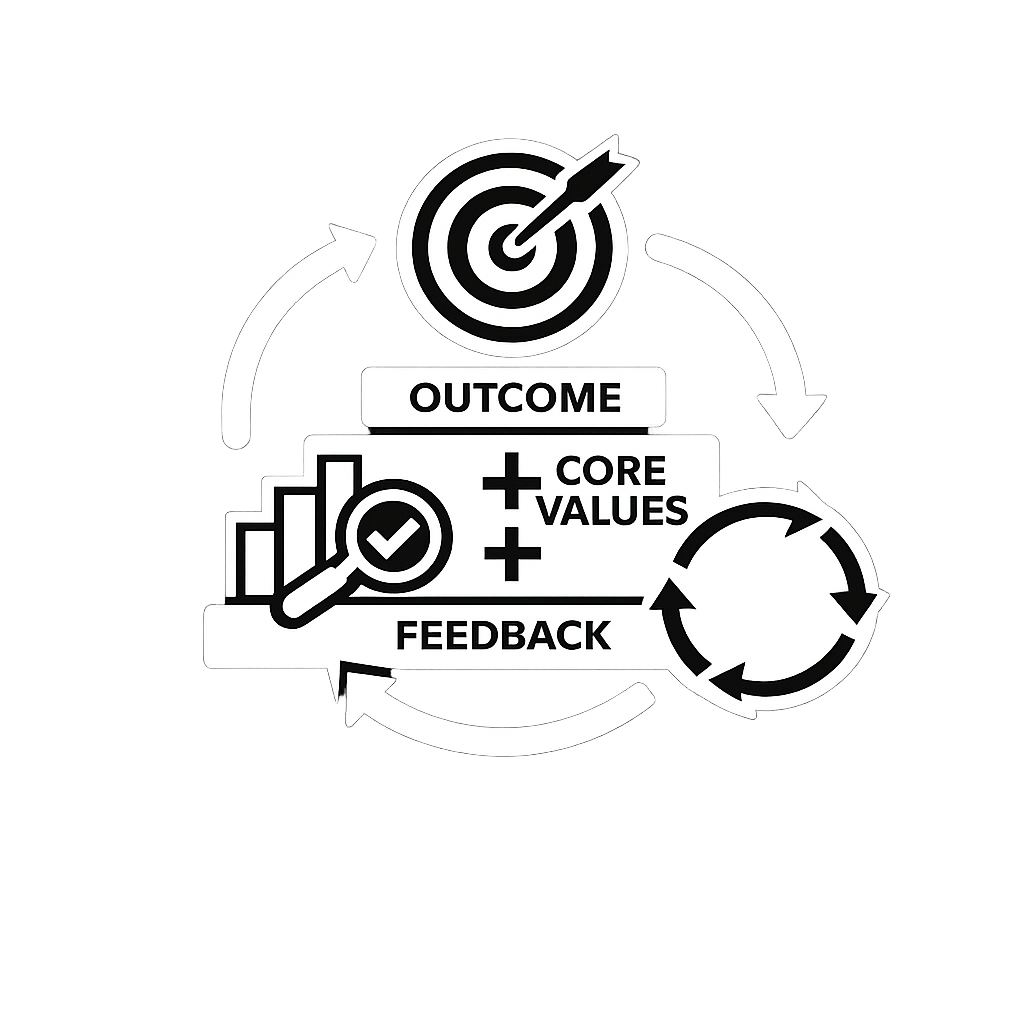
Every system in your field guide needs exactly three things to work. Not two. Not one. Three.
An outcome. A measurement. A feedback loop.
Without all three, you have documentation. You don't have a system.
THE OUTCOME: WHAT DONE ACTUALLY LOOKS LIKE
The outcome is the one sentence that tells your team what they're trying to produce. Not the steps to get there. The result.
For your dispatch system, the outcome might be: every ticket is acknowledged within 15 minutes, triaged accurately on first contact, and routed to the right tech with the context they need to start work without asking a question.
That's a real outcome. It's specific. It's measurable. And your team can look at any ticket and tell you whether the system produced it or didn't.
Compare that to a dispatch process document that says: receive ticket, categorize, assign to tech. Those are steps. They don't tell your team what they're building toward. They don't give them a finish line. They give them a checklist to complete and call it done.
Checklists get completed. Outcomes get achieved. Your clients experience outcomes.
Without a defined outcome, your team is guessing at done. Some of them guess right. Most of them guess in the direction of least friction. And least friction almost never looks like what you'd call excellent.
THE MEASUREMENT: HOW YOU KNOW IF YOU GOT THERE
Once the outcome is defined, the measurement is straightforward. It's the number or the data point that tells you whether the system produced the outcome.
For the dispatch example: percentage of tickets acknowledged within 15 minutes. First-contact triage accuracy rate. Percentage of tickets routed without a reassignment. Those three numbers tell you whether your dispatch system is working. Not whether your team is busy. Not whether tickets are getting closed. Whether the system is producing the outcome you defined.
Here's what happens without a measurement. Your dispatch system runs. Tickets move. Things get handled. And you have no idea whether the system is working until something breaks badly enough that a client calls. By then the drift has been happening for weeks. Maybe months. You just didn't know because you had no measurement to tell you.
A measurement doesn't have to be sophisticated. It doesn't require a dashboard or a BI tool or a weekly reporting process. It requires one number you check on a cadence that's short enough to catch drift before your clients do.
Weekly is usually enough. Daily for high-volume systems. Monthly for lower-frequency systems like QBRs or new hire onboarding.
The cadence matters less than the commitment. Pick the number. Check it on a schedule. Know what good looks like so you know when you're drifting away from it.
THE FEEDBACK LOOP: HOW YOU CATCH DRIFT BEFORE YOUR CLIENTS DO
The feedback loop is the mechanism that takes the measurement and turns it into action.
It's not a report. It's not a dashboard your manager checks when they remember to. It's a defined process for what happens when the measurement shows drift. Who sees it. When they see it. What they do about it. And how quickly the response happens relative to how badly the system is drifting.
Without a feedback loop, measurement is just data. Data doesn't fix anything. Data that triggers a defined response fixes things.
For your dispatch system, the feedback loop might look like this. Every Monday morning, your dispatcher reviews last week's three dispatch metrics. If acknowledgment time is above 20 minutes on more than 10% of tickets, she flags it in the team channel before the standup. The standup includes a two-minute review of what caused the drift. An owner is assigned to fix the specific cause by Friday. The following Monday, she checks whether it resolved.
That's a feedback loop. It's not complicated. It doesn't require a tool. It requires a defined process for what happens when the measurement shows a problem.
Most systems don't have this. They have a measurement somewhere that nobody checks on a schedule. Or a metric in a dashboard that gets reviewed when something already went wrong. That's not a feedback loop. That's a postmortem.
Your clients don't want a postmortem. They want a system that catches problems before they feel them.
WHAT THIS LOOKS LIKE ACROSS YOUR 14 SYSTEMS
Every system in your field guide needs all three components.
Your onboarding system. Outcome: every new hire can operate independently on standard tickets within 30 days. Measurement: 30-day checklist completion rate and first-ticket-solo success rate. Feedback loop: hiring manager reviews both metrics at day 15 and day 30, flags gaps, adjusts support before the 30-day mark.
Your escalation system. Outcome: no ticket sits without a documented next step for more than 24 hours. Measurement: percentage of tickets over 24 hours without a status update. Feedback loop: daily 9am review of the aging ticket report, owner assigned to any ticket over threshold before noon.
Your QBR system. Outcome: every client leaves the QBR with three documented action items and a scheduled follow-up. Measurement: QBR completion rate and post-QBR action item documentation rate. Feedback loop: account manager reviews completion data after each QBR cycle, flags any client who missed a QBR for a direct outreach within 48 hours.
Same three components. Different numbers. Different cadences. Same principle throughout.
When every system in your field guide is built this way, something changes. You stop managing by feeling and start managing by data. You stop finding out about problems from clients and start finding out from your own feedback loops. You stop depending on your best people to catch things and start depending on the system.
That's when the business stops needing you to run it. Not because you hired better people. Because you built better systems.
WHERE THIS LIVES IN YOUR FIELD GUIDE
Every system section in your field guide has the same structure. The process steps. The outcome statement. The measurement with the target number and the check cadence. The feedback loop with the defined response protocol.
When a new tech joins your team, they don't just learn what to do. They learn what they're trying to produce, how they'll know if they produced it, and what happens when the system drifts. They have a finish line. They have a scoreboard. They have a process for flagging problems before they become client complaints.
That's not a process document. That's a system. And a system runs without you in the room.
THE CLOSE
Your clients don't experience your process steps. They experience your outcomes.
The ticket either gets acknowledged in 15 minutes or it doesn't. The new hire either operates independently by day 30 or they don't. The QBR either produces three action items or it doesn't. The steps you documented to get there are invisible to them. The outcome is all they see.
Build your field guide around outcomes. Attach a measurement to every one. Build a feedback loop that catches drift before your clients do.
That's the difference between a field guide that sits in a shared drive and one that actually runs your business. Start building at builttorunmsp.com
FREQUENTLY ASKED QUESTIONS
What is the difference between a process and a system?
A process is a sequence of steps that describes how to do something. A system is a process with an outcome defined, a measurement attached, and a feedback loop that tells you when the process is drifting away from producing the right result. You can follow a process perfectly and still get the wrong outcome if the outcome was never defined. A system closes that gap. It tells your team not just what to do, but what they're trying to produce and how they'll know if they got there.
What does an outcome statement look like in an MSP system?
An outcome statement is one sentence that defines what the system is supposed to produce in specific, measurable terms. For a dispatch system: every ticket is acknowledged within 15 minutes, triaged accurately on first contact, and routed to the right tech with the context they need to start work without asking a question. For an onboarding system: every new hire operates independently on standard tickets within 30 days. The outcome statement gives your team a finish line. Without it, done is whatever feels like enough on any given day.
How do you build a feedback loop for an MSP system?
A feedback loop has four components: a measurement you check on a defined schedule, a threshold that tells you when something is wrong, a defined response protocol for when the threshold is crossed, and an owner responsible for executing the response. It doesn't require sophisticated tools. It requires a number, a cadence, a trigger, and a person. The most common failure is having a measurement without a defined response. Data that nobody acts on isn't a feedback loop. It's a report.
How often should you check your system measurements?
The cadence depends on the volume and the stakes of the system. High-volume frontline systems like dispatch and escalation need daily or weekly checks. Medium-frequency systems like onboarding and QBRs need weekly or monthly checks. Lower-frequency systems like annual reviews or contract renewals can be monthly or quarterly. The rule is simple: your check cadence needs to be short enough that when drift shows up in your data, you can correct it before a client feels it. If you're finding out about drift from client complaints, your cadence is too long.
Why don't documented processes produce consistent outcomes?
Because a process document tells your team what to do, not what they're trying to produce. Without a defined outcome, your team defines done for themselves. Some of them define it correctly. Most of them define it as whatever gets the ticket closed fastest. The steps get followed. The outcome varies. Consistency requires three things working together: an outcome your team knows they're building toward, a measurement that tells them whether they got there, and a feedback loop that catches drift before it becomes a pattern. A process document alone produces compliance. All three together produce consistency.

Adam Kuester
Adam Kuester has a PhD in genetics and a career built inside managed services, an unusual combination that shapes how he works. He spent time designing operations at an MSP before joining Bruce McCully to build Galactic Advisors, where he's served as VP of Special Projects. His focus has been operational: finding gaps, building systems, and turning expertise into tools MSP owners can use across a partner base of nearly 1,000 companies. Built to Run MSP is that same work in a different form, practical frameworks for MSP owners who are good at winning business and want to get equally good at running it.